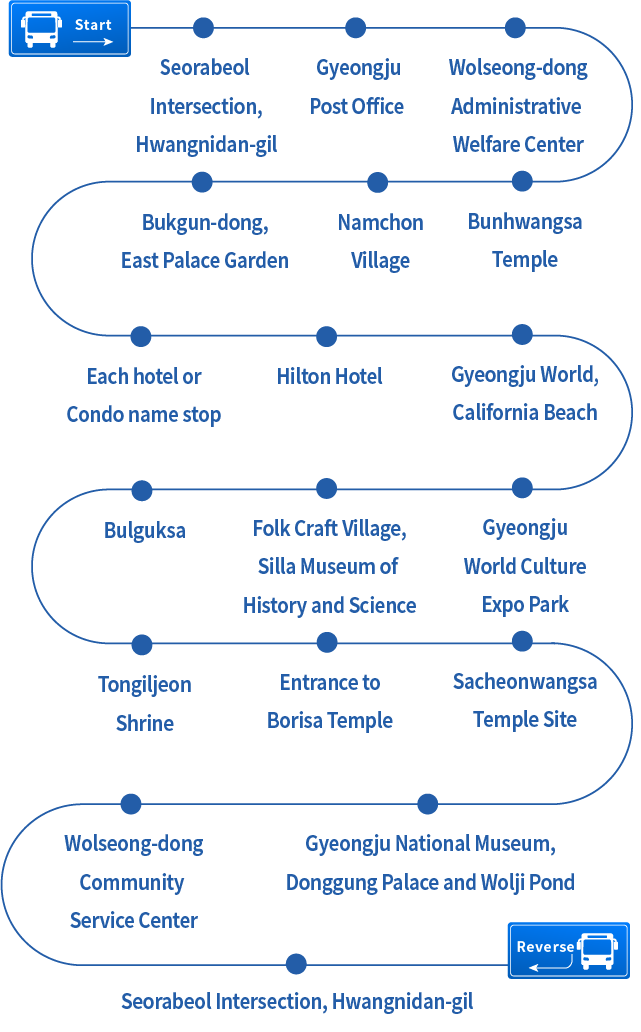
If you are traveling to Gyeongju using public transportation, there is a bus route that you should definitely take at least once. It is Bus No. 10 with a golden route that departs from the Intercity/Express Bus Terminal and passes through the downtown area of Gyeongju, Bomun Tourist Complex, and Bulguksa Temple. A companion Bus No. 11 operates the same route but in the opposite direction. By remembering these two routes, you can visit almost all of Gyeongju's essential tourist attractions.
10(11) bus route
at a glance

Here is the easiest way to travel in Gyeongju, the Gyeongju Bus No. 10 (11) tour course.

The starting point of Bus No. 10
(in front of the Gyeongju Intercity/Express Bus Terminal)
1. Get off@Seorabeol Intersection, Hwangnidan-gil

 Hwangnidan Street

- A must-have course in Gyeongju! It is a tourist street where traces of old neighborhoods, trendy restaurants, accommodations, emotional cafes, shops, and experience workshops are gathered.
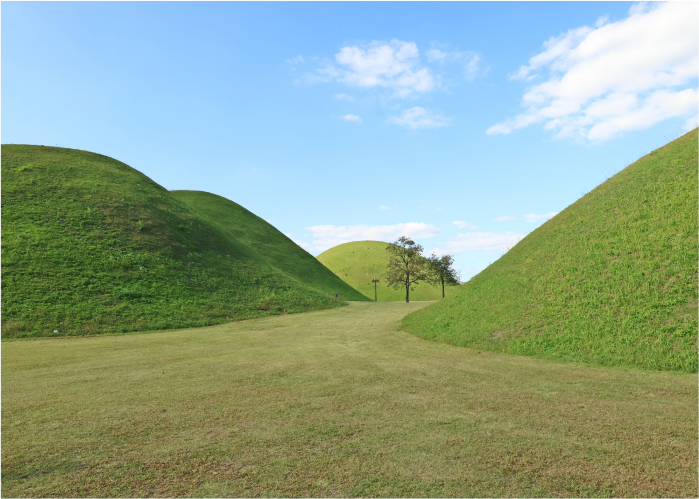
Ancient Tombs in Noseo-dong
- As a member of Daereungwon, you can meet Geumgwanchong and Hoohongchong, where a bronze vessel engraved with the name of King Gwanggaeto, an ancient tomb excavated by Koreans shortly after liberation, was excavated.
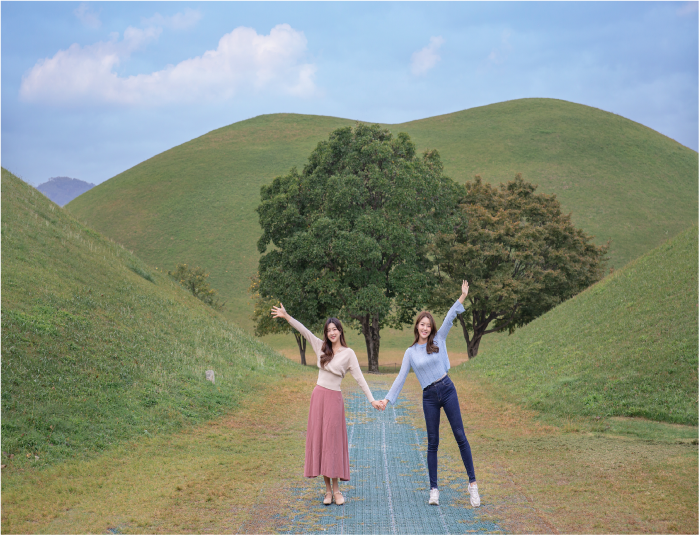
Back gate of Daereungwon
- It is a place where the present and the past coexist, where the tombs of kings and nobles in the early 23rd Silla period are gathered. There are Cheonmachong, Hwangnamdaechong, and Michuhwangneung, a cherry blossom spot, and Daerungwon Photo Zone is a must-visit spot.
2. Get off@Gyeongju Post Office
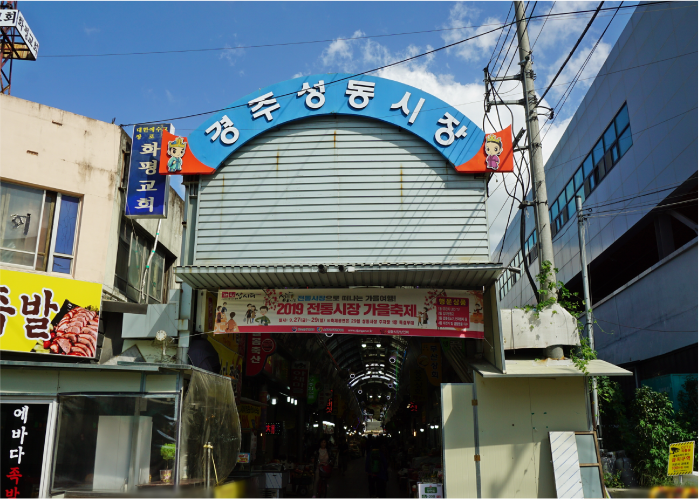
Seongdong Market
- It is the largest permanent traditional market in Gyeongju built in front of the old Gyeongju Station. There are 300 stores by theme, including agriculture, seafood, miscellaneous goods, and food villages.
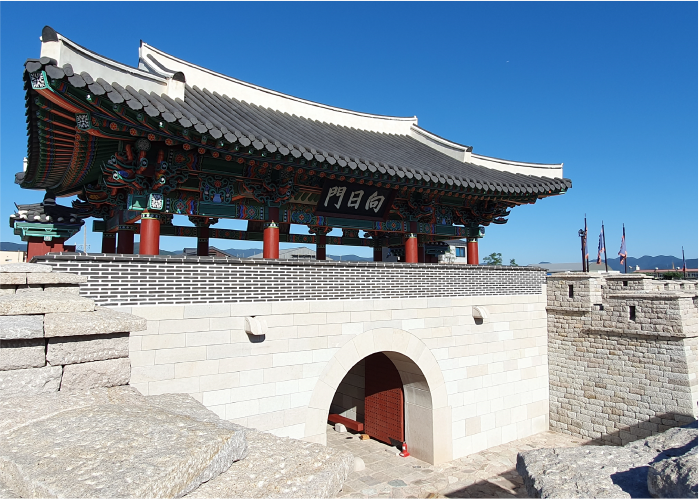
Gyeongjueupseong Walled Town
- It is a castle with administrative and military functions to protect the village from external intrusion. It symbolizes the history of Gyeongju after the Unified Silla Dynasty and has emerged as a new night view attraction in Gyeongju.
3. Get off@in front of Wolseong-dong Administrative Welfare Center
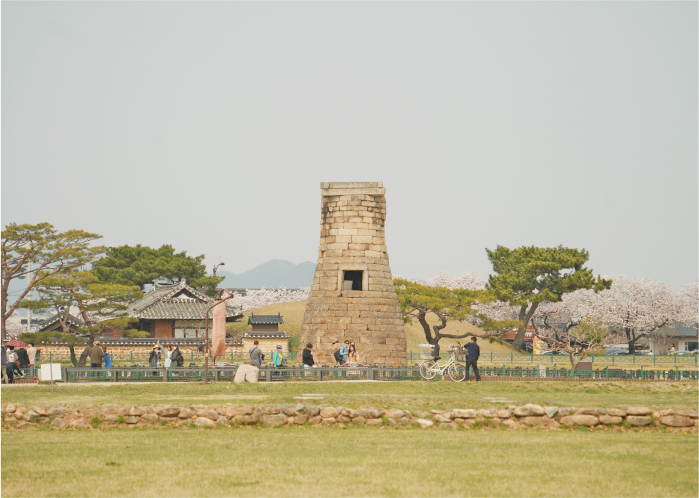
Cheomseongdae
- It is said to have been built during the reign of Queen Seondeok, and is the oldest star observation facility in the East. It has been a strong place for 1,500 years as a landmark of Gyeongju.
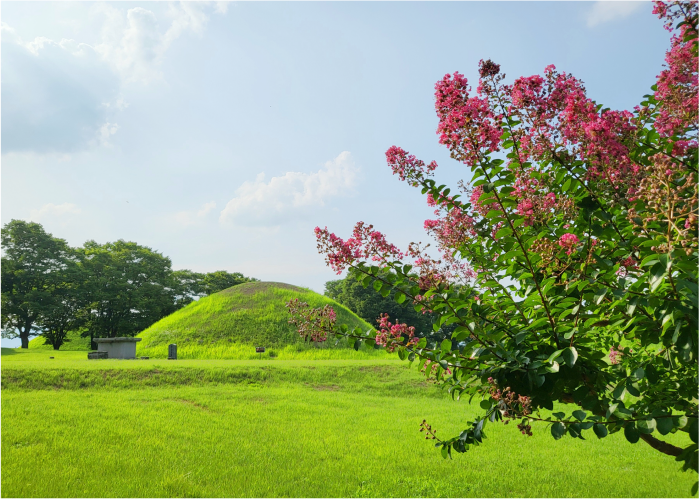
Gyeongju Gyerim Forest
- It is a thousand-year-old forest with the history of the founding of Silla, and is on the way up from Cheomseongdae to Wolseong. The story of the birth of Kim Al-ji, the founder of Gyeongju Kim Clan, is told.
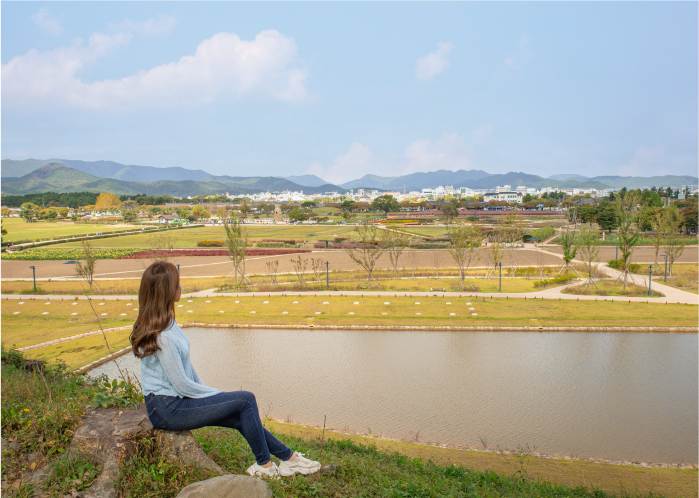
Wolseong Fortress
- It is the site of a royal palace with a history of 1,000 years during the Silla period. It is also called Banwolseong Fortress because the shape of the castle is like a half moon. If you climb the wall, you can see the eastern historical district at a glance.
4. Get off@Bunhwangsa Temple
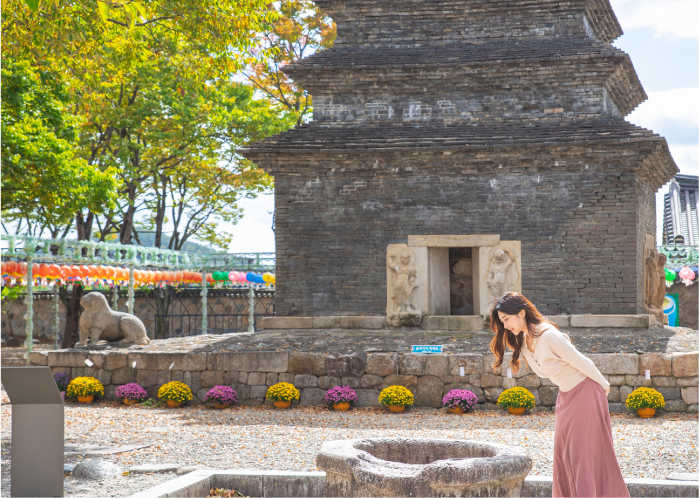
Bunhwangsa Temple
- It was founded in the 3rd year of Queen Seondeok (634), and it is a historic temple where Great Master Jajang and Great Master Wonhyo stayed and preached Buddhism. There is the oldest stone pagoda in Silla.
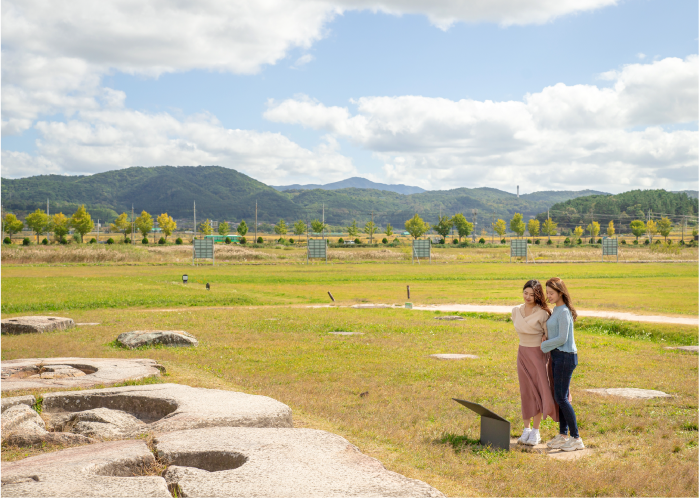
Hwangnyongsa Temple Site
- It is a huge temple built during the reign of King Jinheung of Silla and completed in 17 years. There was a 9-story wooden pagoda with a height of 25 floors in an apartment building, but only the temple site remains due to the invasion of the Mongolian army during the Goryeo Dynasty.
5. Get off@ Entrance to Namchon Village

Silla Wanggyeong Forest
- It is a recreation of a natural water forest called "Orisu" to prevent flooding of Bukchon during the Silla Dynasty. It is on the way to Bomun Tourist Complex and is well-known for cherry blossoms and autumn leaves.

Tomb of King Jinpyeong
- It is the tomb of the 26th King Jinpyeong, the father of Queen Seondeok. Professor Yoo Hong-joon also selected it as a must-see place in Gyeongju in "My Cultural Heritage Review."

Supmeori Food Village
- It is a street specializing in food created in 'Supmeori Village' on the road from downtown Gyeongju to Bomun Tourist Complex.
6. Get off@Pension Village in Bukgun-dong, East Palace Garden

East Palace Garden
- It is an experiential theme park created by reinterpreting Donggung Palace and Wolji in a modern way. It consists of Bird Park, a new zoo, and Donggung Botanical Garden made of glass greenhouses.
7. Get off@each hotel or condo name stop
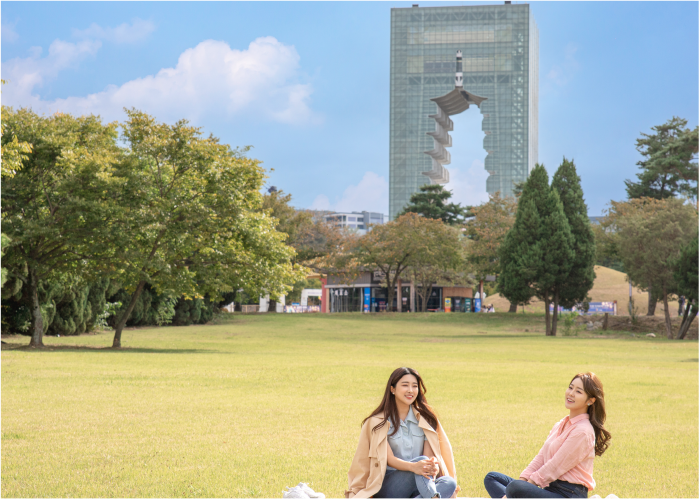
Bomun Tourist Complex
- It is a comprehensive tourism resort built on an area of 2.4 million pyeong since the Gyeongju Comprehensive Development Plan Project was established in the 1970s, paying attention to "tourism."
8. Get off@Hilton Hotel

Bomunjeong Pavilion
- CNN introduced two ponds and octagonal pavilions in Korea. It is a place with beautiful trees around it, giving off a quiet Korean-style garden atmosphere.
9. Get off@Gyeongju World, California Beach
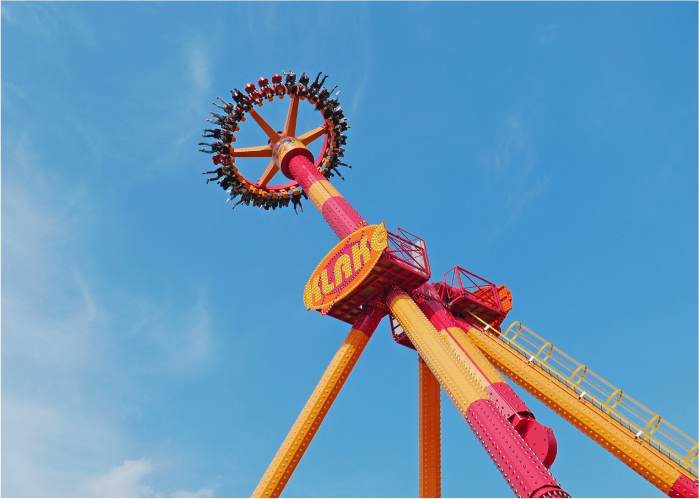
Gyeongju World
- It is an amusement park representing Gyeongju, which started with Doturak World and was reborn as Gyeongju World. Draken, a 90-degree vertical drop ride, is gaining huge popularity.

California Beach
- It is a water park operated with Gyeongju World, a representative amusement park in Gyeongju.
10. get off@ Expo Park

Gyeongju World Culture Expo Park
- The World Culture Expo was held in 1998, where exhibitions, performances, experiences, and cultural contents such as Gyeongju Tower, Hwarang Forest, Solgeo Art Museum, and Silla Wanggyeong Forest can be enjoyed in one place.

Gyeongju Solgeo Art Museum
- It is the first public art museum in Gyeongju, where artist Park Dae-sung, the master of Korean painting, expressed his intention to donate his work. The "window with scenery" in the third exhibition room is a popular photo zone.
11. Get off@Folk Craft Village, Silla Museum of History and Science
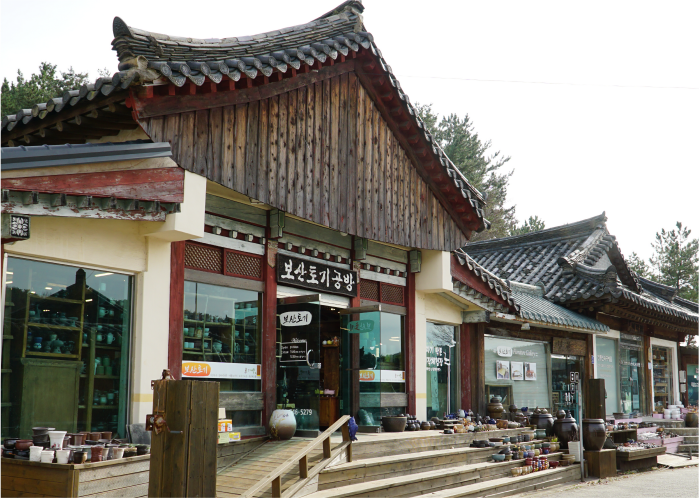
Folk Craft Village
- It is an artist village built in 1986 at the foot of Tohamsan Mountain to preserve and develop the craft technology of the Silla period.
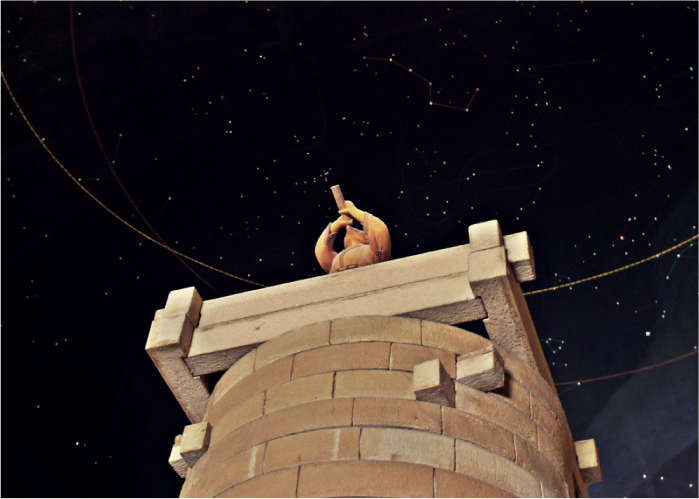
Silla Museum of History and Science
- It is a science exhibition hall in the Folk Craft Village, and there is a model that explores and restores the history of science and technology from Silla to the Joseon Dynasty and reinterprets the principle of production.
12. Get off@Bulguksa Temple
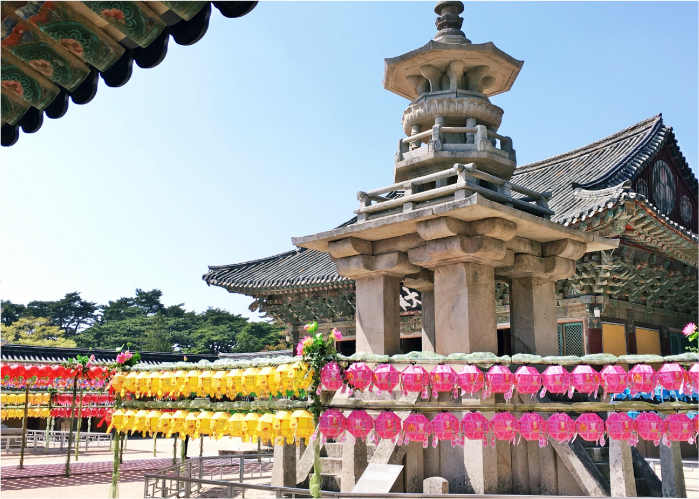
Bulguksa Temple
- It is a temple that fully reflects the Buddhist scriptures and the ideals of the Silla people in the layout of the Garam, and was the first in Korea to be listed as a UNESCO World Heritage Site. Dabotap and Seokgatap are located here.
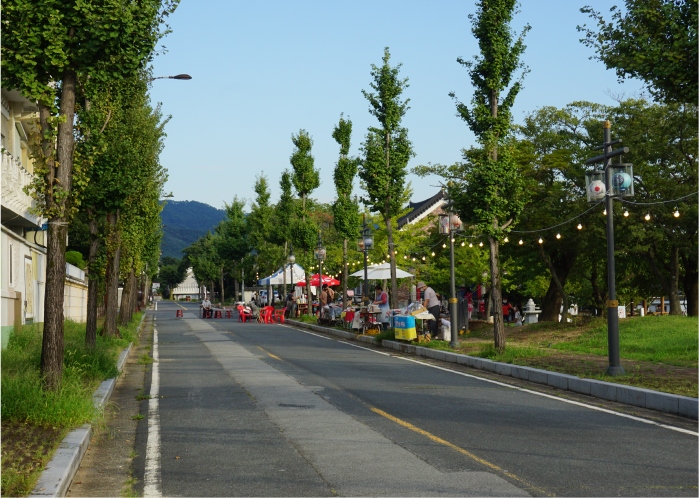
Bullidan-gil
- It is a hanok shopping complex built in front of Bulguksa Temple in the 1970s, and is called the second Hwangridan-gil as urban regeneration projects have recently been promoted in the area.
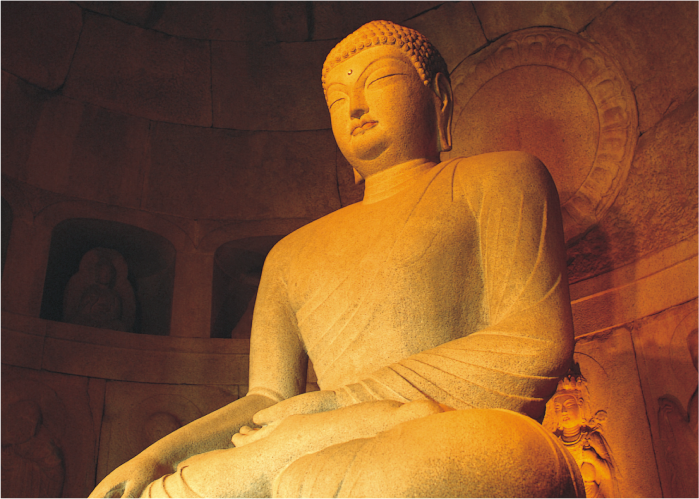
Seokguram Grotto
- It is an artificial stone cave temple founded by Kim Dae-sung, a prime minister during the reign of King Gyeongdeok of Silla, and completed in the 10th year of King Hyegong, and is the best masterpiece that combines Silla's architecture, science, religion and art.
13. Get off@Tongiljeon Shrine
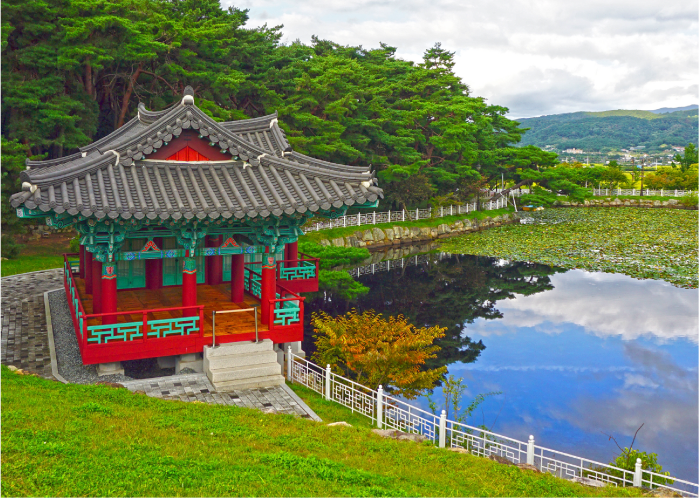
Tongiljeon Shrine
- It continues the value of Silla, which achieved the first unified state on the Korean Peninsula, and is a place to pray for unification and peace on this land, and the portraits of King Muyeol, King Munmu, and General Kim Yu-shin, the leaders of the unification of the Three Kingdoms are enshrined.
14. Get off@ Entrance to Borisa Temple
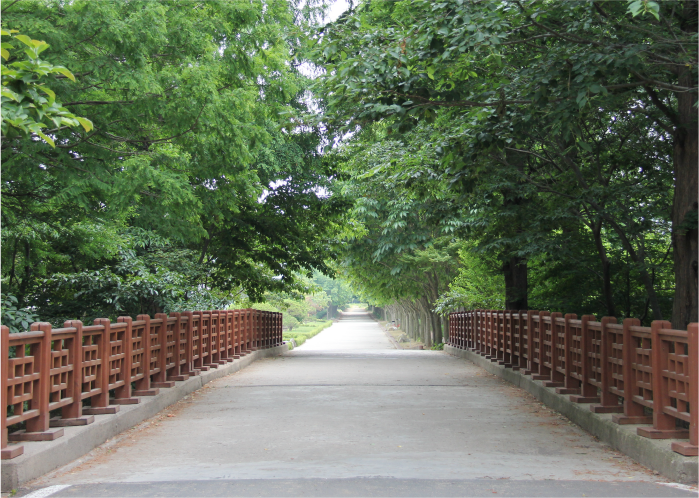
Gyeongbuk Millennium Forest Garden
- It is a garden that has been created since 2016 using excellent forest resources from the Forest Environment Research Institute at the foot of Namsan Mountain in Gyeongju. It has 13 themed gardens, including Mirror Forest and Seorabeol Garden.
15. Get off@Sacheonwangsa Temple Site
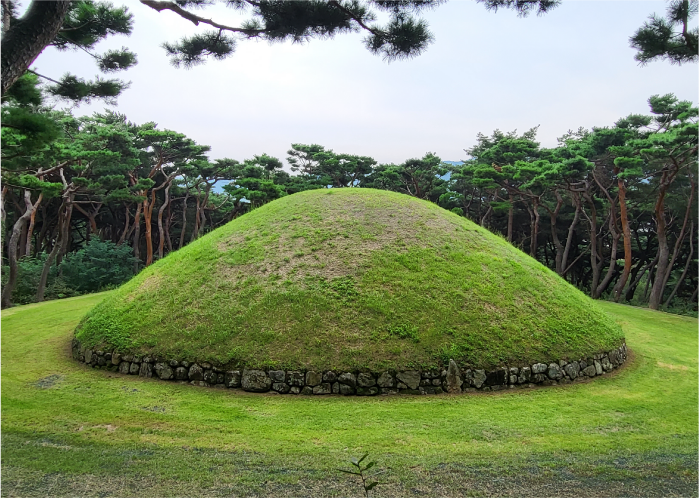
Tomb of Queen Seondeok
- It is a place where Queen Seondeok, the first queen of the Korean Peninsula, is asleep at the top of Nangsan Mountain 100m above sea level, and you can meet it if you go up a little along the pine forest trail at the entrance of Nangsan Mountain.
16. Get off@Gyeongju National Museum, Donggung Palace and Wolji Pond
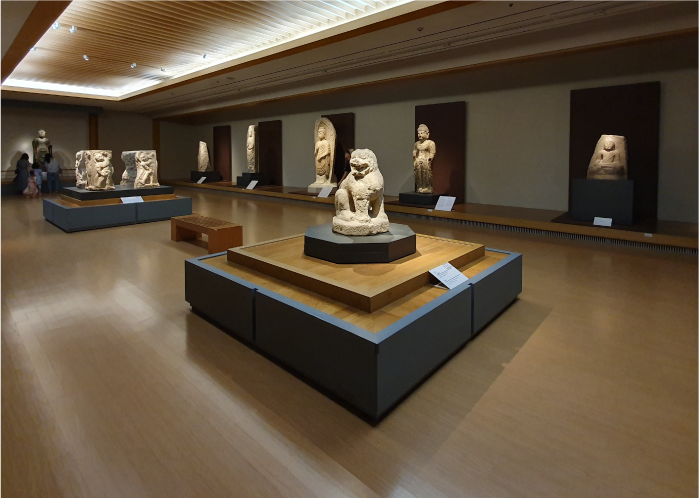
Information
- You can meet the excellent legacy of Silla art, which shows the journey of Silla history from the founding to the destruction of Silla and the height of splendor.

Donggung Palace and Wolji Pond
- It is a familiar place under the name of Anapji, and there were beautiful gardens and pavilions used as a place for separate palaces, banquets, and entertainment where princes of the Silla Dynasty lived.
17. Get off@in front of Wolseong-dong Administrative Welfare Center
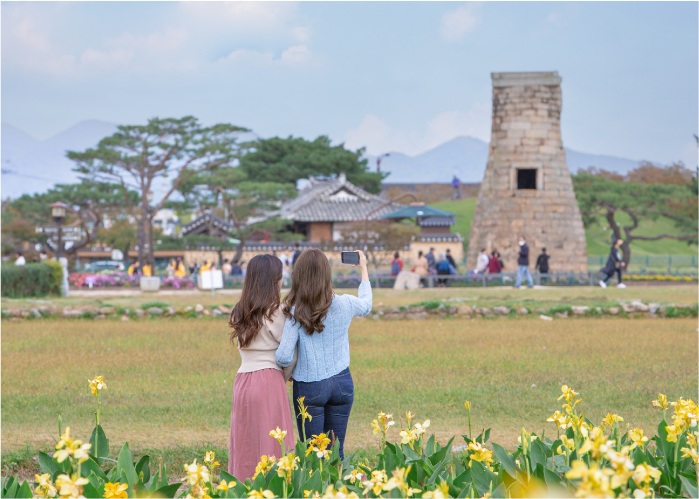
Cheomseongdae
- It is said to have been built during the reign of Queen Seondeok, and is the oldest star observation facility in the East. It has been a strong place for 1,500 years as a landmark of Gyeongju.
18. Get off@Seorabeolgeori, Hwangnidan-gil

Jungang Market
- History began in the early 1900s with the formation of a war. Currently, more than 700 stores are in operation, and it represents the traditional market in downtown Gyeongju along with Seongdong Market.
Destination
(Gyeongju Intercity/Express Bus Terminal)
 ※The Bus No.11 operates in the reverse direction.
please note!
In Gyeongju's major bus stops, digital information boards are installed with the Bus Information System (BIS), providing real-time bus schedules and updates. This has dramatically enhanced the convenience of bus travel in Gyeongju.


