Gyeongju is indeed a city that is perfect for walking. With each step, you encounter precious cultural heritage sites and breathtaking natural landscapes that capture your attention.
How about taking a stroll along the Namsan Trail in Gyeongju? The entire mountain is an open-air museum registered as a UNESCO World Heritage Site. Let's explore the hidden gems of Gyeongju Namsan Mountain by walking along the valleys and ridges that extend north and south, with Geumobong and Gowi Bong as the main peaks.
There are two hiking trails on the eastern and western sides of Namsan Mountain. The trail leading to the eastern part is called the "Namsan East Trail," while the trail leading to the western part is called the "Samneung Trail." Let's take a walk along the Namsan East Trail, which is especially beautiful during autumn.
Namsan East Trail Course, where I want to walk.
at a glance

Namsan East Trail, where I want to walk
Exploring the Essence of Dongnamsan Open-Air Museum
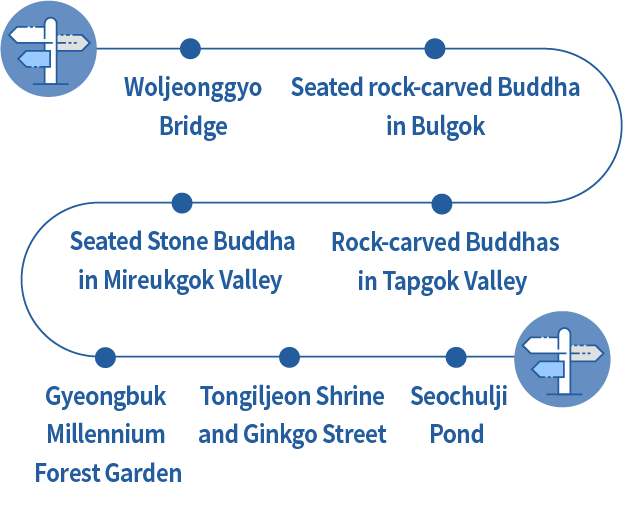
 Namsan East Trail A walking tour course
- Itinerary Difficulty: :The majority of the course consists of flat terrain with very little incline.
- Itinerary Length and Duration :Approximately 8km (one-way) with a total duration of around 3 hours, including sightseeing time.
- Itinerary Starting Point :Woljeonggyo Bridge
- Itinerary Route :Woljeonggyo Bridge → Seated Rock-carved Buddha in Bulgok → Rock-carved Buddhas in Tapgok Valley → Seated Stone Buddha in Mireukgok Valley → Gyeongbuk Millennium Forest Garden → Tongiljeon Shrine and Ginkgo Street → Seochulji Pond
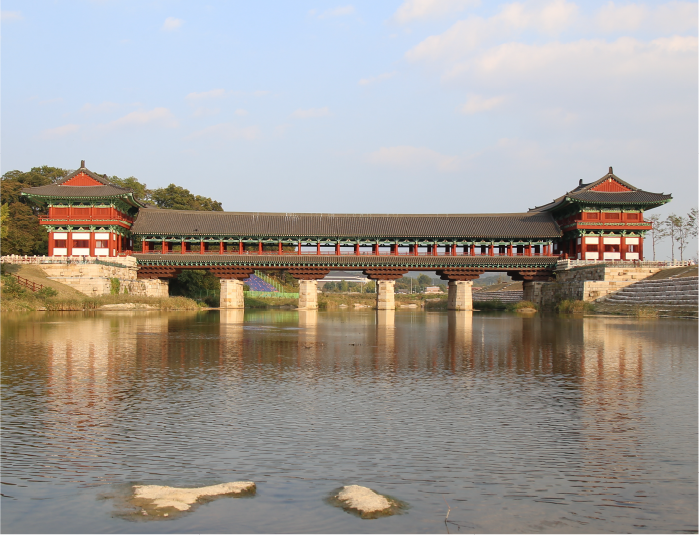
 Woljeonggyo Bridge

- A bridge that serves as a gateway connecting the Silla Royal Palace Wolseong Fortress and the southern part of Serbeol.
- The stone-pillared wooden bridge above Namcheon Stream and the magnificent moon pavilions on both sides are impressive.
- A must-visit spot for breathtaking night views! We recommend enjoying the enchanting beauty of the bridge from the iconic stepping stones on Namcheon Stream.
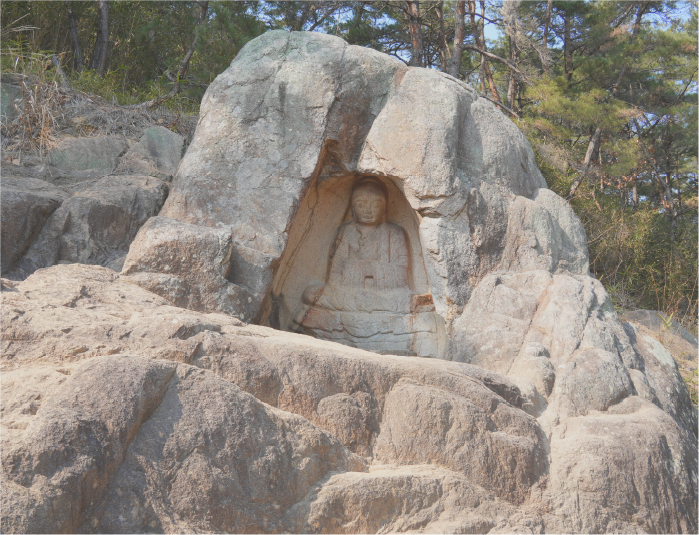
Seated Rock-carved Buddha in Bulgok
- The oldest stone Buddha statue found on Namsan Mountain in Gyeongju.
- It is a 30-minute walk along the eastern foothills of Namsan Mountain from Woljeonggyo Bridge.
- A 1m-high cave was dug in a natural rock, and Buddha was carved inside.
- The valley, known as Bucheogol Valley (Bulgok), derived its name from the discovery of this Buddha statue.
- This serene and gentle Buddha statue, Gamshil Halmae (Grandmother Gamshil), showcases a graceful smile.
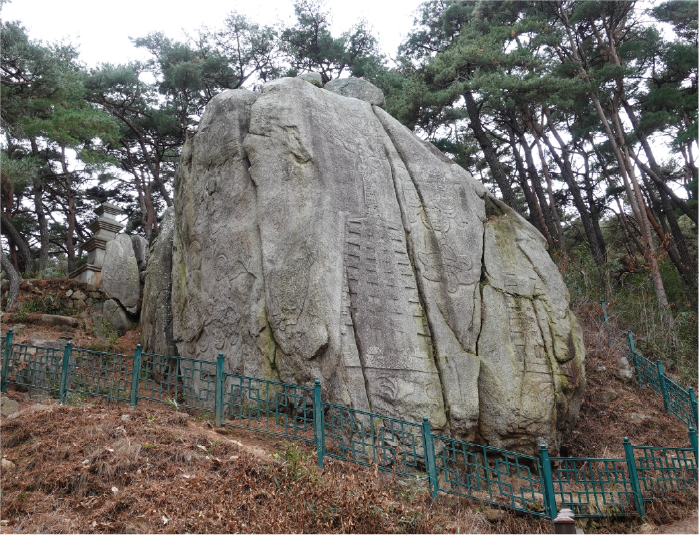
Rock-carved Buddhas in Tapgok Valley
- The entire surface of the massive rock is adorned with engraved Buddha figures in all directions.
- It is located approximately 700m away from Bucheogol Valley (Bulgok).
- It takes on a unique form where the world of Buddha is pictorially expressed on a rock that measures up to 9m.
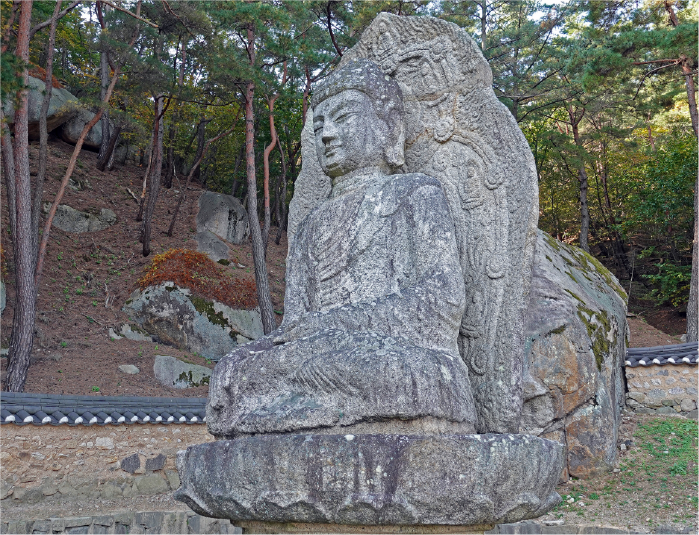
Seated Stone Buddha in Mireukgok Valley
- It is situated in a location presumed to be the site of the Silla-era temple, Borisa.
- A single stone-seated Buddha statue peacefully guarding on the hill of Borisa Temple.
- Among the stone Buddha statues found on Namsan Mountain in Gyeongju, this is the most intact statue of Buddha.
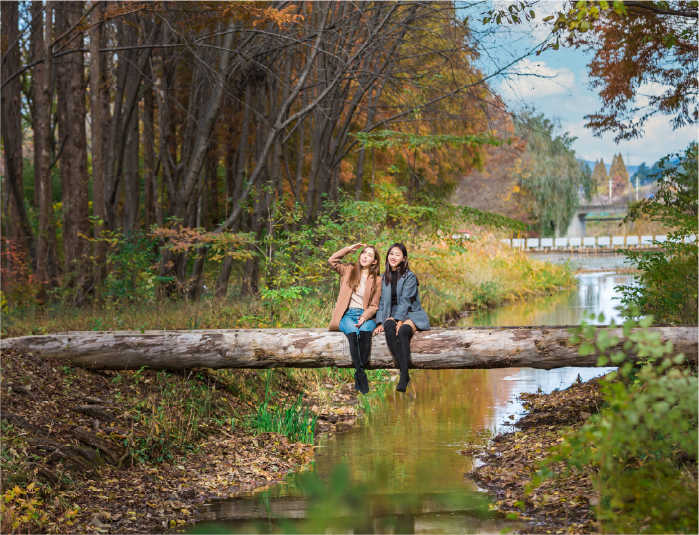
Gyeongbuk Millennium Forest Garden
- A garden themed after Gyeongju's "Five Mountains and Three Waters" concept.
- It has been newly created as a regional garden of Gyeongsangbuk-do.
- The log bridge in the Mirror Forest is a popular photo spot and a must-visit location for capturing memorable pictures.
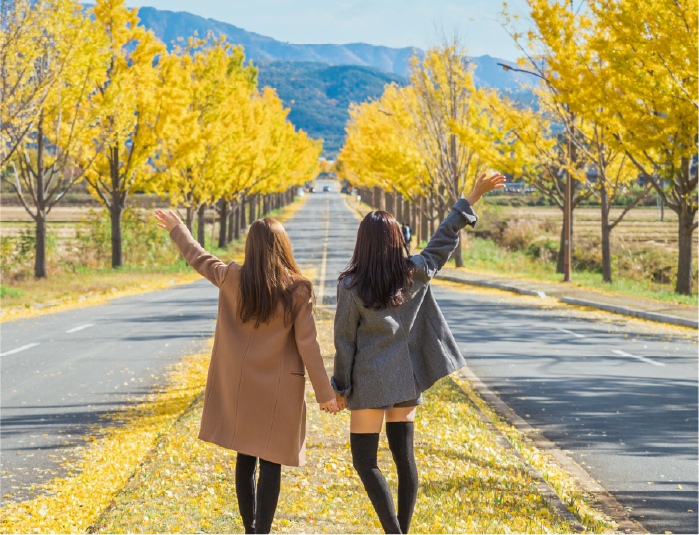
Tongiljeon Shrine and Ginkgo Street
- A place that reflects upon the Silla Dynasty's unification of the Three Kingdoms and expresses the desire for peace and reunification of the Korean Peninsula.
- The long, stretched road in front of the pavilion is famous for its beautiful
- Enjoy the well-maintained gardens and take in the panoramic view of the hill in Namsan-dong from the pavilion at the top.
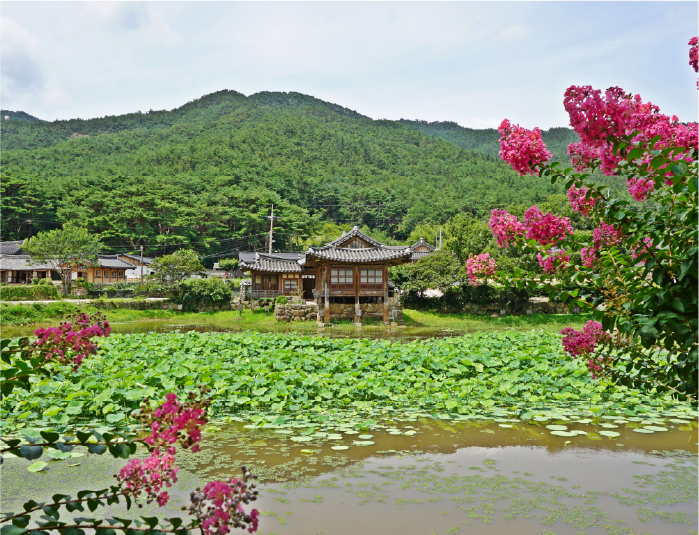
Seochulji Pond
- It holds a folklore that revolves around a letter that saved a king.
- The serene pond and the Joseon-era pavilion, Iyodang, harmonize beautifully.
- When capturing the picturesque scenery, including the stunning landscape of Namsan East stretching behind, it creates a masterpiece akin to a traditional mountain painting.


